
Gear Up for Safe Cycling: The Ultimate Guide to Bike Mirrors
Table of Contents
- Why Bike Mirrors Matter
- Types of Bike Mirrors
- How to Choose the Right Bike Mirror
- Installation and Maintenance Tips
- Safety Tips for Using Bike Mirrors
- Real-Life Experiences
- Conclusion
Introduction
Cycling is increasingly popular as a sport, an eco-friendly transportation alternative, and an effective fitness regime. Whether pedaling through busy city streets or enjoying the open road, safety remains paramount. Yet, bicycle safety rear-view mirrors often go unnoticed amidst helmets and lights. They are an essential safeguard against some of the most common urban cycling hazards. By integrating mirrors into your cycling routine, such as those found with bicycle safety rear view bicycle mirrors, you effortlessly expand your rearward visibility, significantly decreasing the risk of blind spot collisions.
The unassuming bike mirror, much more than a mere accessory, transforms your ride by enhancing situational awareness and decision-making. While some may undervalue them, studies and statistics reveal their critical role in cycling safety. Let us dive deep into the world of bike mirrors, offering insights that might redefine your cycling experience.
Why Bike Mirrors Matter
The importance of bike mirrors extends beyond their modest appearance. They serve as crucial gear designed to protect cyclists by offering a clearer picture of the environment around them. The necessity for improved safety measures is highlighted by the fact that bicycle-related incidents caused many lives and injuries in 2020 alone, according to the National Highway Traffic Safety Administration. Many of these incidents occur due to reduced visibility or sudden obstacles in a cyclist’s path. Mirrors enable cyclists to anticipate such dangers, offering a second line of defense when navigating complex traffic conditions. A bike mirror is a reflective surface and a proactive safety measure that can distinguish between a near-miss and an unfortunate event.
Types of Bike Mirrors
One size does not fit all when it comes to bike mirrors. They are specifically designed to accommodate diverse cycling preferences, and often, the choice hinges on personal comfort and the nature of the cycling undertaken.
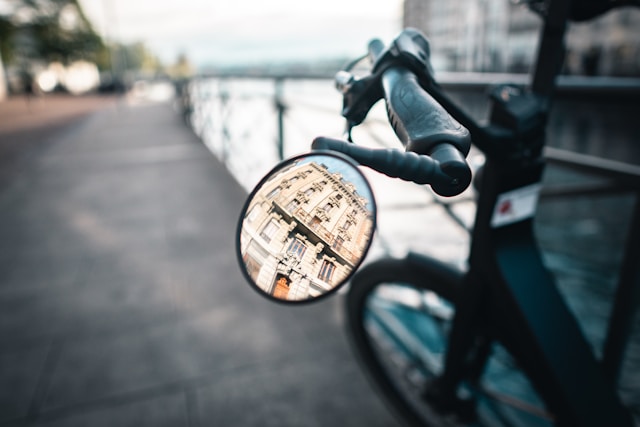
- Handlebar Mirrors: These are fixed to the ends of the handlebars, providing a stable and predictable point of reference. They are particularly favored by urban commuters who benefit from the consistent view without significantly adjusting their line of sight.
- Helmet Mirrors: Affixed to the helmet, these mirrors move with the rider’s head, granting a flexible and adjustable vantage point. Preferred by long-distance and touring cyclists, helmet mirrors enable glances rearward without major head movements that could affect balance.
- Eyeglass Mirrors: Lightweight and often minimalistic, these attach directly to glasses, offering a seamless experience for those who wear prescription spectacles or sunglasses. While versatile, they require acclimation as they move more immediately with head movements.
Selecting the right type involves understanding their distinct advantages tailored to varying cycling scenarios.
How to Choose the Right Bike Mirror
Choosing the right bike mirror demands careful consideration of several pivotal factors that contribute to its overall effectiveness:
- Field of View: A broader mirror offers a wider view, reducing blind spots. Riders who navigate bustling traffic should prioritize larger, convex options for maximum coverage.
- Weight: For performance cyclists, mirror weight is crucial, as heavier attachments can subtly alter the bicycle’s handling. Materials like acrylic strike a balance between durability and weight.
- Adjustability: Mirrors that pivot and tilt provide tailored vantage points, accommodating riders of various heights and cycling positions. Adjustable mirrors ensure adaptability to changing conditions.
Evaluating these aspects against personal riding habits and environments can lead to informed choices that enhance riding experiences.
Installation and Maintenance Tips
Proper installation of bike mirrors is key to ensuring they function effectively without unexpected adjustments mid-ride.
- Position the mirror on the handlebar or helmet where it offers the best unobstructed view. Typically, the end of the handlebar or the side of the helmet provides optimal stability.
- Secure mounting is critical. Utilize appropriate tools to affix the mirror, ensuring the screws are tight yet not overtightened to avoid damage.
- Frequent alignment checks prevent unwanted vibrations on rough terrains. Ensure the mirror remains firmly in place after encountering bumps and jolts.
Maintenance, while often overlooked, extends a mirror’s usability. Regular cleaning with non-abrasive solutions prevents grime from compromising visibility, while periodic tension checks ensure stability for every ride. For additional maintenance tips, explore articles on platforms like Bicycling.com.
Safety Tips for Using Bike Mirrors
Mirrors, while crucial, require proper user integration to be effective:
- Develop a consistent habit of checking mirrors periodically throughout your ride. This continuous awareness helps you anticipate approaching vehicles and other road users.
- Never rely solely on mirrors; they complement, not replace, direct visual checks. A quick shoulder glance helps verify your mirror’s view, especially in high-traffic or complex intersections.
- Practice is fundamental. Please familiarize yourself with your mirror’s perspective in a controlled environment to fully understand its scope and limitations.
Experienced cyclists advocate incorporating these strategies into their routines, which foster heightened awareness and control over their riding environment.
Real-Life Experiences
As echoed by seasoned cyclists, the transition to using mirrors can be a pivotal safety upgrade. Numerous reports and anecdotes confirm that those who began using mirrors often wonder how they rode safely without them. A participant in a popular cycling forum highlights a near-miss with a vehicle narrowly averted due to an early mirror sighting, exemplifying the life-altering potential of this simple tool.
Conclusion
While small, bike mirrors substantially enhance cycling safety. Their ability to offer clear, consistent rearward visibility equips cyclists to make informed, timely decisions. Cyclists improve their safety and enjoy a ride imbued with confidence and preparedness by integrating and maintaining the correct type of mirror for their needs.