
Materials and Processes in Aerospace Manufacturing
Table of Contents
- Introduction to Aerospace Materials
- Critical Materials Used in Aerospace Manufacturing
- Importance of Fasteners in Aerospace Industry
- Manufacturing Processes for Aerospace Components
- Quality Control in Aerospace Manufacturing
- Emerging Trends in Aerospace Materials
- Conclusion
Introduction to Aerospace Materials
The aerospace industry relies heavily on advanced materials to ensure aircraft and spacecraft safety, efficiency, and performance. The selection of materials is critical, with numerous factors such as weight, strength, and durability being carefully considered. Suppliers, including hardware distributors, play a significant role in providing the necessary components that meet stringent aerospace standards. These materials are not chosen randomly but result from extensive research and testing to ensure they meet the rigorous demands of aerospace applications.
Understanding the critical nature of aerospace materials helps comprehend how various components work together to achieve optimal performance. This includes factors ranging from material properties to the strict quality controls employed in manufacturing. It is essential to recognize that the success of an aircraft or spacecraft largely depends on the materials used in its construction, which often integrate both traditional metals and cutting-edge composites.
Critical Materials Used in Aerospace Manufacturing
- Aluminum Alloys
- Titanium Alloys
- Composite Materials
- Ceramics
- Superalloys
Materials such as aluminum and titanium alloys are commonly used for their strength and lightweight properties. Research on aluminum alloys has led to innovations that improve fuel efficiency and reduce emissions. These materials are known for their high performance in various environments and applications. Aluminum alloys, for example, are prized for their low density and excellent corrosion resistance, making them ideal for aircraft structures and components.
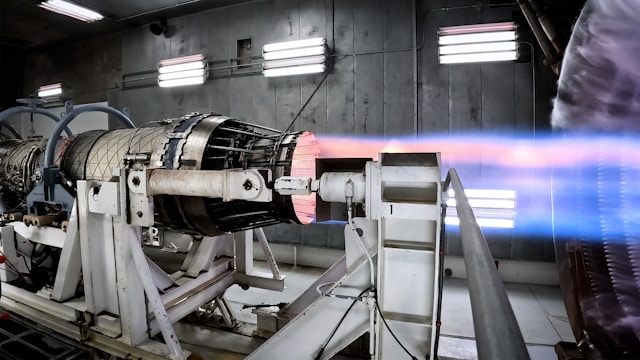
Composite materials like carbon fiber are increasingly popular in the aerospace sector due to their outstanding strength-to-weight ratio. These materials offer significant weight savings compared to traditional metals, enhancing fuel efficiency and payload capacity. Ceramics and superalloys are also integral to aerospace manufacturing, particularly in high-temperature environments such as jet engines, where their ability to maintain strength at elevated temperatures is crucial.
Importance of Fasteners in Aerospace Industry
Fasteners play a crucial role in aerospace manufacturing. They ensure that various parts of an aircraft or spacecraft are securely held together. Fasteners must withstand extreme conditions, including high temperatures and pressures. This article on fastener fatigue explains how fasteners can impact the structural integrity of aerospace components. The reliability of fasteners is paramount, as even a minor failure can lead to catastrophic results in an aircraft.
Aerospace fasteners are designed to meet specific standards, such as those set by the FAA and other regulatory bodies. The materials used for fasteners are carefully selected to match the application’s requirements, whether it involves high-strength steel, titanium, or other advanced alloys. Fasteners must be designed to endure the dynamic loads experienced during flight, including vibrations and cyclic stresses, without compromising the structural integrity of the aircraft.
Manufacturing Processes for Aerospace Components
Aerospace manufacturing involves several intricate processes, such as:
- Forging
- CNC Machining
- 3D Printing
- Casting
- Surface Treatment
These procedures are made to fulfill the strict requirements needed for aerospace applications, guaranteeing that every part operates dependably and securely under challenging circumstances. Traditional techniques that provide high accuracy and dependability, such as forging and CNC machining, are essential for items that need strong durability and tight tolerances.
A new additive manufacturing technique, or 3D Printing, is completely changing the aircraft industry. It makes it feasible to create intricate geometries that would be challenging or impossible with traditional techniques. This technology might also significantly decrease manufacturing time and material waste. Casting and surface treatments also improve the mechanical characteristics and lifespan of aircraft components.
Quality Control in Aerospace Manufacturing
Controlling quality is essential in the aerospace sector. To ensure components fulfill stringent requirements, manufacturers employ various testing techniques, including real-time monitoring and non-destructive testing (NDT). As a result, there is less chance of failure and more dependability with aerospace items. Maintaining the safety of both airplanes and spacecraft depends on putting these quality checks into practice.
Non-destructive testing (NDT) methods, including magnetic particle inspection, radiography, and ultrasonic testing, find faults and imperfections in materials without causing harm. Thanks to real-time monitoring and data analytics, every component is made to meet the highest quality requirements. These methods assist in anticipating and avoiding possible faults. The aircraft industry depends on these precautions to sustain safety and confidence.
Emerging Trends in Aerospace Materials
Recent advances in materials science have introduced new possibilities in aerospace manufacturing. Innovations in nanotechnology and material composites pave the way for lighter and stronger materials. These advancements are enhancing performance and contributing to greater fuel efficiency and sustainability in the aviation sector.
For example, the development of graphene-based materials has the potential to revolutionize the aerospace industry. Graphene’s exceptional strength and electrical conductivity make it a promising candidate for various applications, including lightweight structural components and advanced sensors. Additionally, bio-inspired materials are being explored for their unique properties, offering new ways to approach aerospace manufacturing challenges.
Conclusion
The aerospace industry continuously evolves with advancements in materials and manufacturing processes. As innovation propels us forward, staying informed about the latest trends and research is crucial for maintaining safety and efficiency in the skies and beyond. By understanding and leveraging the latest materials and processes, the aerospace sector can continue to push the boundaries of what is possible.
The collaborative efforts of engineers, scientists, and manufacturers ensure that aerospace technology remains at the forefront of innovation. Future developments will likely see even more sophisticated materials and processes, contributing to safer, more efficient, and more sustainable air and space travel. Whether through incremental improvements or groundbreaking discoveries, pursuing excellence in aerospace manufacturing will always be propelled by the relentless quest for better materials and technologies.